The repeat() Function
Repeat Yourself — But In CSS
Section titled “Repeat Yourself — But In CSS”Writing this is fine… once:
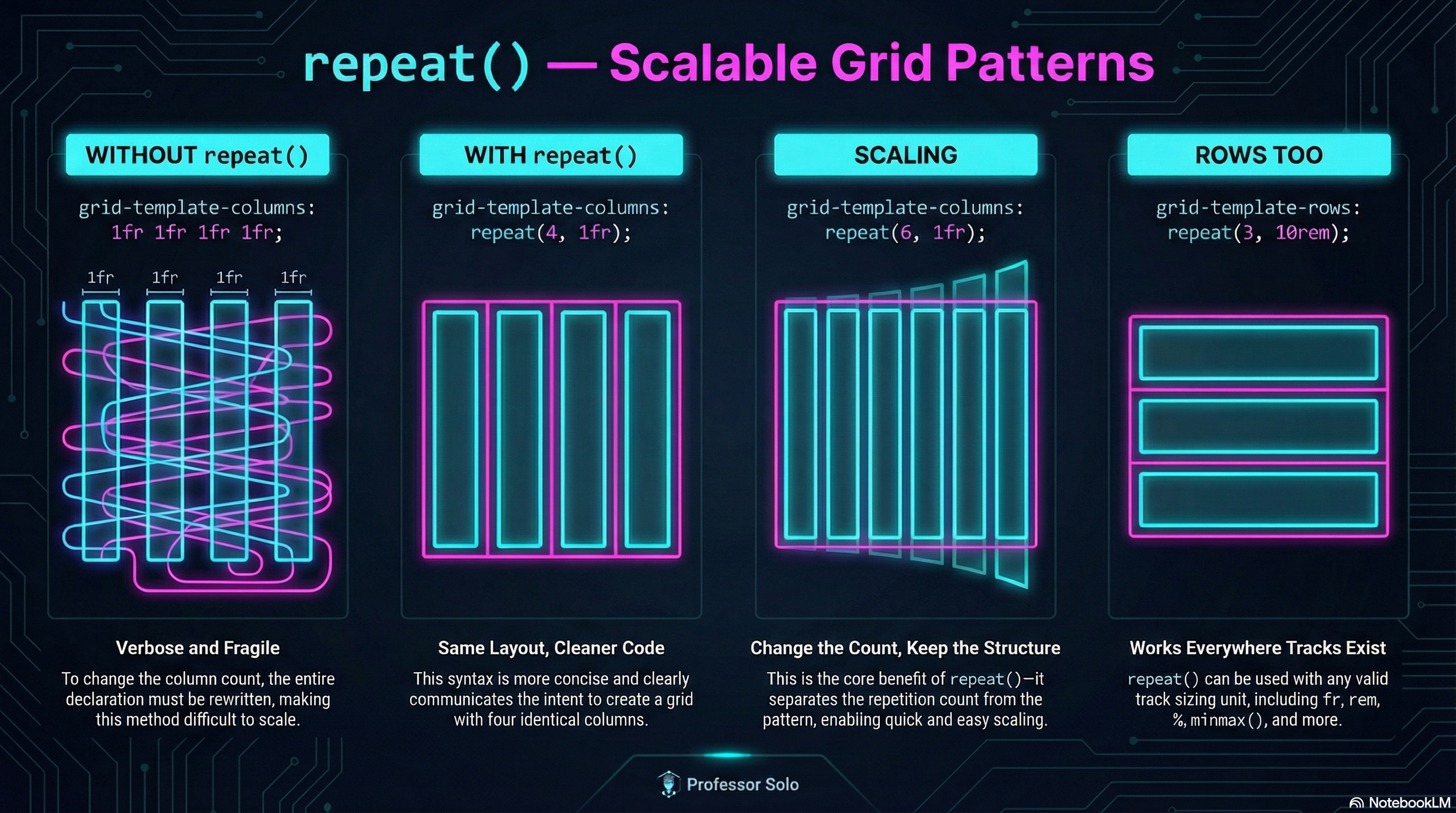
grid-template-columns: 1fr 1fr 1fr 1fr;Writing it all semester is not.
repeat() lets you define track patterns cleanly — and scale them without rewriting your template every time.
The Syntax
Section titled “The Syntax”grid-template-columns: repeat(4, 1fr);That means:
- Make 4 columns
- Each column is 1fr
Same result. Less noise.
Change the Count, Keep the Pattern
Section titled “Change the Count, Keep the Pattern”grid-template-columns: repeat(6, 1fr);You didn’t rewrite the track list — you changed the count.
That’s the whole point.
Repeat Works for Rows Too
Section titled “Repeat Works for Rows Too”grid-template-rows: repeat(3, 10rem);Any track size works: fr, rem, %, minmax(), etc.
🧪 MiniMo — Pattern Forge
Section titled “🧪 MiniMo — Pattern Forge”Long templates are a smell.
Patterns are power.
The Takeaway
Section titled “The Takeaway”Use repeat() when:
- Your grid has repeated structure
- You want to scale column/row counts quickly
- You want templates that stay readable under pressure
Extra Bits & Bytes
Section titled “Extra Bits & Bytes”📘 Grid repeat() function Study Guide (PDF)
📘 Grid repeat() function Infographic (PNG)
⏭ Growth is implied: The Implicit Grid
Section titled “⏭ Growth is implied: The Implicit Grid”There will always be more items than expected in a container. Where will they go?