Vite: The Modern Contract
A Different Question
Section titled “A Different Question”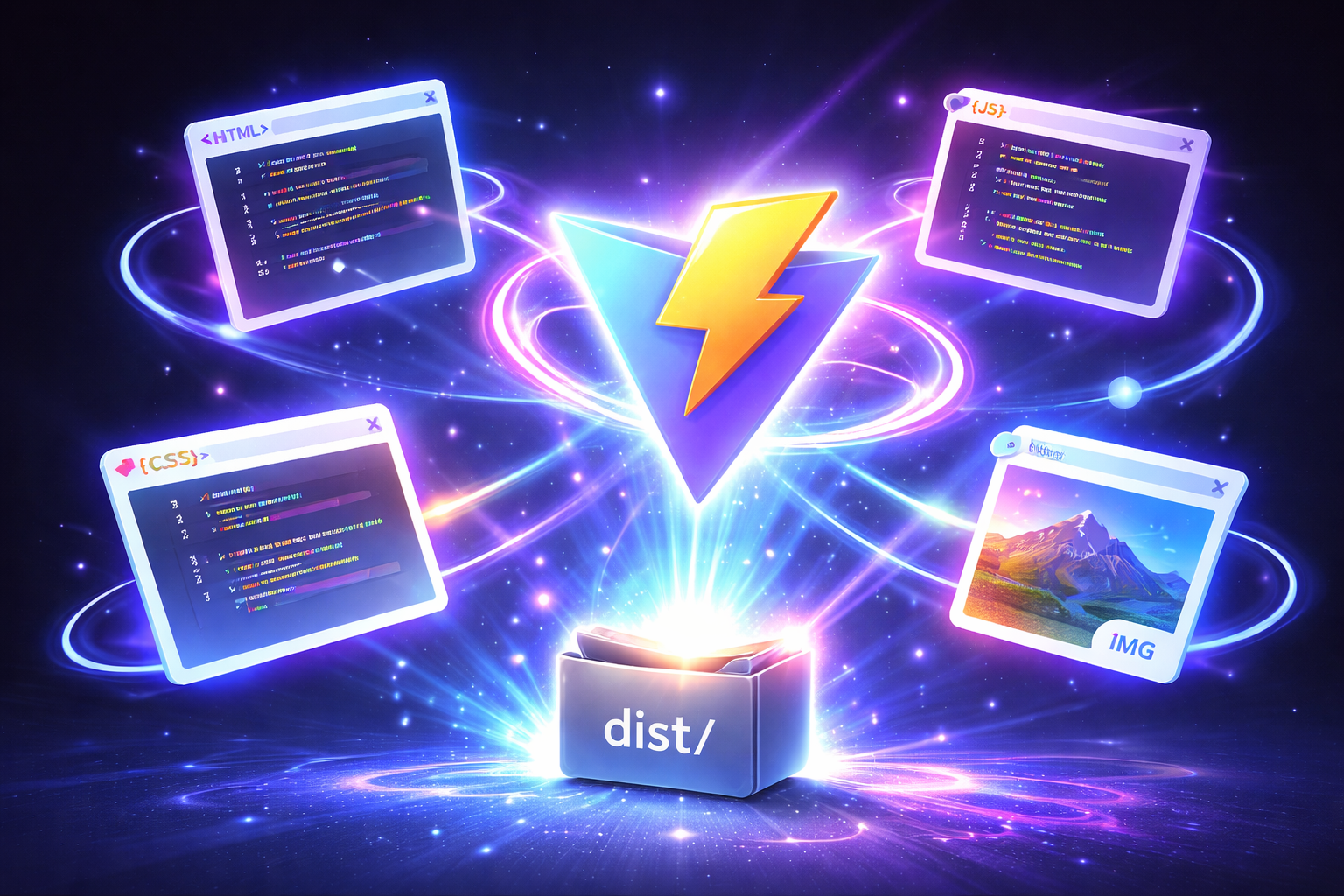
Vite splits the workflow: lightning-fast module-based development, followed by an optimized production build.
Pipeline-based tools asked:
“How do we process files?”
Modern tooling asks a different question:
“How do we run front-end development?”
That shift changes everything.
Vite Is Not a Task Runner
Section titled “Vite Is Not a Task Runner”Vite is not a collection of build steps.
It is a development platform.
Instead of defining pipelines, Vite provides:
- a dev server
- file watching
- instant reload
- a production build step
All from a single foundation.
HTML Is the Entry Point
Section titled “HTML Is the Entry Point”One of the biggest mental shifts Vite introduces:
Your app starts at index.html.
Not a config file.
Not a build script.
The browser loads HTML.
Everything else flows from there.
This aligns tooling with how the web actually works.
Native Modules, Finally
Section titled “Native Modules, Finally”Modern browsers support ES modules.
Vite takes advantage of that:
- files are served directly
- imports work natively
- no bundling during development
You edit a file. The browser reloads instantly.
No pipeline required.
Dev First, Build Later
Section titled “Dev First, Build Later”With Vite, development and build are separate phases.
- Development is fast and unbundled
- Builds happen once, at the end
- Optimization is deferred until it matters
This eliminates the slow feedback loops of pipeline-based tools.
Plugins Replace Pipelines
Section titled “Plugins Replace Pipelines”Where Gulp required glue code, Vite uses plugins.
Each plugin:
- hooks into the dev server
- extends behavior
- stays isolated
Tailwind. Sass. TypeScript.
They all plug into the same contract.
Why Frameworks Chose Vite
Section titled “Why Frameworks Chose Vite”React. Vue. Svelte. Astro.
They didn’t choose Vite because it was trendy.
They chose it because:
- it matches modern browser capabilities
- it minimizes configuration
- it keeps tooling invisible
The platform fades into the background.
The New Baseline
Section titled “The New Baseline”Vite replaces:
- task runners
- manual watchers
- custom build glue
Not by doing more —
but by doing less, better.
It becomes the ground everything else stands on.
⏭ Under the Hood
Section titled “⏭ Under the Hood”Vite feels simple on the surface.
Next, we’ll peek just enough under the hood to understand why it feels that way — without falling into config rabbit holes.